

TL;DR
- Citations in AI responses are explicit source attributions where AI platforms like ChatGPT, Perplexity, and Gemini reference specific brands, URLs, or content as authoritative foundations for their synthesized answers—functioning as the new currency of digital influence.
- Unlike unlinked brand mentions, citations provide clickable source links that drive measurable referral traffic, enable direct attribution tracking, and signal higher authority to both users and other AI systems.
- Citation rates correlate directly with market share gains—brands improving citation frequency by 150% through GEO strategies capture disproportionate Share of Voice and influence buyer consideration before prospects enter traditional sales funnels.
What Is a Citation in AI Responses?
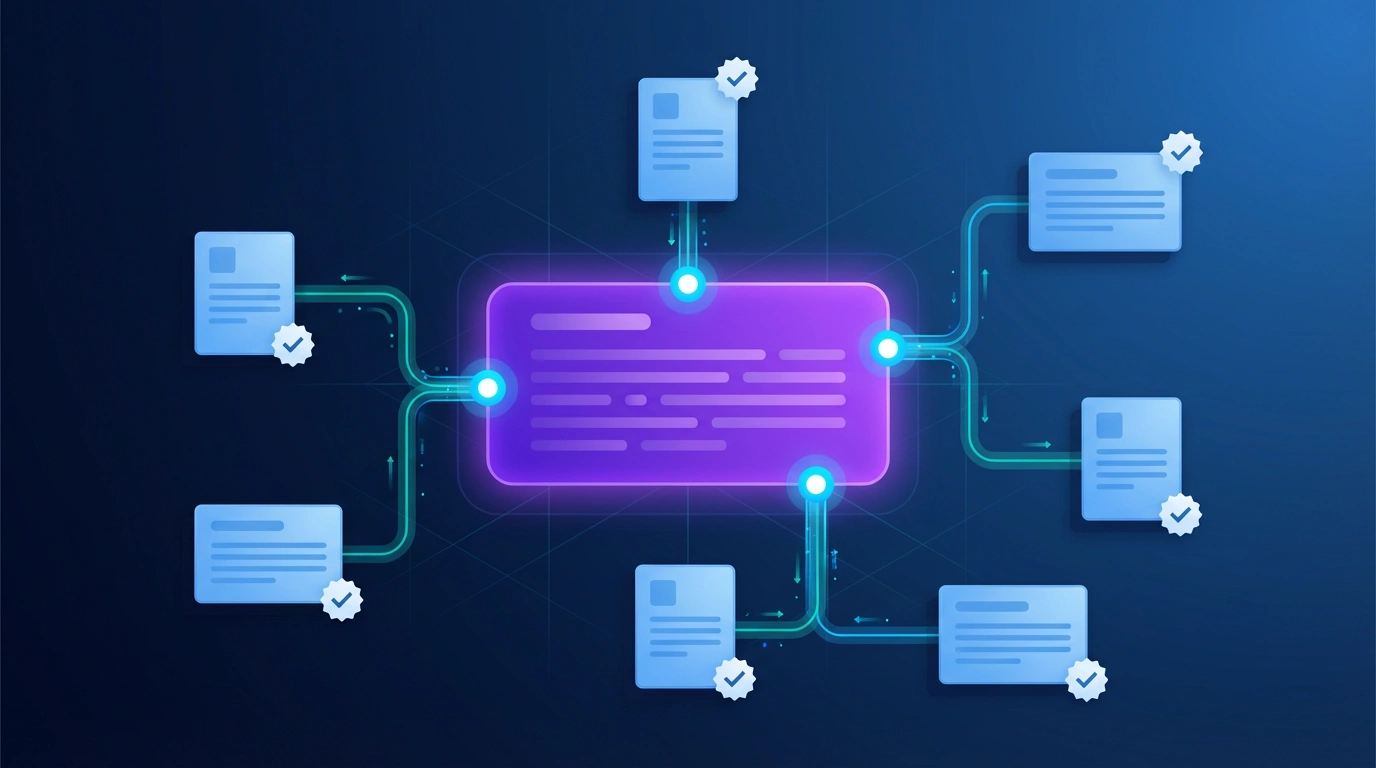
A citation in AI responses is a structured source attribution where an AI search engine or conversational platform explicitly references a specific webpage, brand, or content asset as the authoritative basis for information included in its synthesized answer.
Citations differ fundamentally from mere brand mentions. When Perplexity answers a query about lead attribution software, a mention might state “LeadSources.io offers tracking capabilities.” A citation includes that statement plus a numbered reference like [1] with a clickable hyperlink to the source URL, enabling users to verify claims and explore deeper.
This structural distinction creates measurable business impact. Citations generate direct referral traffic that appears in analytics platforms with identifiable source data. Mentions build awareness but produce no trackable conversions unless prospects independently search for your brand afterward—creating attribution blind spots.
Different AI platforms implement citation architectures differently. Perplexity provides inline numbered citations throughout responses with expandable source panels. ChatGPT Search surfaces citations as linked references below synthesized answers. Google AI Overviews integrate citations as “Sources” buttons adjacent to AI-generated content. Claude occasionally provides source references but less consistently than search-focused platforms.
For B2B marketers managing attribution, citations represent the critical bridge between invisible influence and measurable impact. When your content earns citations for category queries (“best marketing attribution platforms,” “lead tracking software comparison,” “CRM integration tools”), you capture prospect attention during the research phase—before they visit websites or submit forms. This early-stage influence compounds throughout the buyer journey even when direct attribution remains incomplete.
The competitive dynamics are zero-sum. Each AI response cites a finite number of sources—typically 3-8 depending on query complexity and platform. If competitors earn those citation slots and you don’t, prospects receive recommendations excluding your brand entirely. Citation Share of Voice therefore functions analogously to impression share in paid search, quantifying your relative visibility within AI-mediated discovery.
Test LeadSources today. Enter your email below and receive a lead source report showing all the lead source data we track—exactly what you’d see for every lead tracked in your LeadSources account.
Why Citations Matter for Lead Attribution
Citations create attribution challenges and opportunities that require measurement framework redesign beyond traditional funnel tracking.
Direct Referral Traffic with Full Attribution Visibility
Unlike brand mentions that generate no trackable events, citations from Perplexity and similar platforms pass referrer headers to destination websites. This enables standard GA4 attribution—you see sessions originating from perplexity.ai, track conversion paths, and assign revenue credit through existing multi-touch attribution models.
Data from multiple B2B sources indicates AI-cited traffic converts 2.3-2.8x higher than organic search traffic. Prospects arrive more educated, having consumed comparative analysis and feature evaluations within the AI response itself. This compressed research cycle reduces sales cycle length while maintaining or improving close rates.
Influence Measurement for Non-Clickable Citations
Not all citations generate direct traffic. ChatGPT Search and Google AI Overviews often synthesize information from cited sources without users clicking through. Prospects complete research, form vendor shortlists, and make buying decisions without ever appearing in your analytics as AI-sourced traffic.
This creates dark discovery—invisible influence that shapes outcomes without generating attributable touchpoints. Forward-thinking attribution frameworks now incorporate citation rate as a leading indicator predicting downstream conversions. When your citation frequency increases for high-intent queries, form submissions typically rise 4-8 weeks later even without direct referrer data connecting the two.
Share of Voice as Competitive Intelligence
Citation Share of Voice measures the percentage of target queries where your brand receives citations versus competitors. Tools like Otterly, Profound, and Conductor track this metric across hundreds or thousands of predefined prompts, providing quantitative visibility benchmarks.
Brands tracking citation SOV report it correlates more strongly with pipeline growth than traditional SEO rankings. A 10-point increase in citation SOV (e.g., from 15% to 25% of tracked queries citing your brand) typically corresponds to 18-25% increases in MQL volume over subsequent quarters. This leading indicator characteristic makes citation SOV valuable for forecasting and strategic planning.
Citation Cascades and Compound Authority
When your content earns citations from major AI platforms, that authority signal compounds. Secondary AI systems training on web data observe that ChatGPT, Perplexity, and Gemini all cite your domain for specific topics. This creates citation cascades where initial citations increase probability of future citations across platforms—a positive feedback loop absent in traditional SEO.
Brands documenting citation patterns observe citation clustering by topic. Once you achieve citation critical mass for a specific category (e.g., “marketing attribution”), AI platforms begin citing you for adjacent queries (“lead tracking,” “CRM analytics,” “campaign measurement”) without requiring separate optimization for each variation. This topic authority transfer accelerates Share of Voice expansion beyond directly optimized queries.
How Citation Systems Work
Understanding the technical mechanics of citation generation enables more effective GEO strategy development.
Retrieval-Augmented Generation (RAG) Architecture
AI platforms determine citations through multi-stage RAG pipelines. When processing queries, systems execute real-time web searches retrieving potentially relevant content. Retrieval algorithms prioritize recency, domain authority, semantic relevance, and content structure.
Retrieved content passes through LLM synthesis layers that extract information and generate natural language responses. The citation layer maps specific claims in synthesized answers back to source URLs, creating the numbered references users see. This mapping process favors sources with clear, verifiable statements over vague marketing copy.
Citation Selection Criteria Across Platforms
Different platforms apply distinct citation selection heuristics. Perplexity emphasizes citation transparency, often including 6-12 sources per response with heavy weighting toward recent publications and authoritative domains. Research from Profound indicates Perplexity cites social platforms (Reddit, Quora) at 19.4% versus ChatGPT at 5.3%.
ChatGPT Search favors institutional sources, with 15.3% of citations coming from educational or reference platforms like Wikipedia. Google AI Overviews show strong preference for domains already ranking well in traditional organic results—approximately 60% citation overlap with top-5 SERP positions for the same query.
Claude provides fewer citations overall, relying more heavily on pre-training knowledge with selective web retrieval for time-sensitive queries. This makes Claude citations rarer but potentially higher value when earned.
Citation Positioning and Prominence
Citation order within AI responses impacts click-through rates and perceived authority. First-cited sources receive disproportionate attention—studies tracking user behavior in Perplexity responses show the first citation generates 3.2x more clicks than the fifth citation for identical query types.
Optimization strategies therefore target not just earning citations but achieving first-citation positioning. Factors influencing citation rank include content freshness (more recent sources cited earlier), domain authority signals, alignment between content structure and query intent, and citation density (fact-rich content with supporting data).
Citation vs. Mention Distinction
Marketing strategies must account for fundamental differences between citations and unlinked brand mentions.
Attribution Capability
Citations provide clickable links enabling direct traffic attribution through referrer headers. Standard analytics implementations identify AI-sourced sessions, track conversion paths, and calculate ROI. Mentions generate brand awareness but no trackable events—prospects must independently search for your brand to enter measurable funnels.
This attribution gap makes citation optimization higher priority for performance marketing teams focused on pipeline generation. Brand marketing teams may value mentions equally for awareness objectives, but demand generation requires the measurement precision citations enable.
Authority Signaling
Citations signal explicit endorsement—the AI tells users “this brand is the authoritative source.” Mentions acknowledge existence without endorsement. When Perplexity cites your comprehensive lead attribution guide as source [1] for answering “how does multi-touch attribution work,” it positions you as the category expert. A mention might simply note “several vendors including LeadSources.io offer attribution solutions” without authority differentiation.
This authority distinction impacts prospect perception and sales cycle dynamics. Brands earning consistent citations for category queries report prospects entering sales conversations already convinced of vendor expertise, reducing educational burden on BDRs and shortening time-to-opportunity.
Traffic Volume and Quality
Citations drive lower traffic volume than traditional SEO rankings but higher quality leads. A top-3 organic ranking might generate 1,000 monthly sessions with 2% conversion rate (20 conversions). Citations for the same query might generate 150 sessions with 6% conversion rate (9 conversions)—less total traffic but nearly half the conversion volume from higher-intent, better-educated prospects.
CAC efficiency therefore often favors citation-driven acquisition. Lower traffic volumes mean reduced infrastructure costs, while higher conversion rates and shorter sales cycles improve unit economics. B2B SaaS companies tracking citation attribution separately from organic search report 40-65% lower CAC for citation-sourced MQLs.
Tracking and Measuring Citation Performance
Citation measurement requires specialized tooling and adapted attribution frameworks.
Direct Citation Monitoring
Deploy AI visibility platforms (Otterly, Profound, Conductor, BrandRadar) that execute predefined query sets daily across major AI platforms. These tools record citation frequency, positioning, sentiment, and Share of Voice metrics. Establish baseline measurements across 100-500 target queries spanning category terms, competitor comparisons, and feature-specific searches.
Track five core citation metrics: citation rate (percentage of queries generating any citation), average citation position (numerical rank within responses), Share of Voice (your citations divided by total citations across all brands for tracked queries), citation sentiment (positive, neutral, negative context), and referral traffic volume from identifiable AI sources in GA4.
Attribution Path Analysis
Configure GA4 custom channel groupings isolating AI referral traffic as distinct sources. Create segments tracking users with AI touchpoints in their conversion paths. Analyze time-to-conversion, session count, and engagement depth for AI-sourced prospects versus other channels.
For citations that don’t generate direct traffic (ChatGPT, Claude), implement temporal correlation analysis. Track citation rate increases for specific query categories, then measure MQL/SQL volume changes 30-90 days later. Establish baseline correlations enabling predictive forecasting—if citation SOV improves 15%, project corresponding pipeline increases based on historical patterns.
Competitive Citation Benchmarking
Monitor competitor citation rates for the same query sets. Calculate relative Share of Voice trends month-over-month. Identify queries where competitors dominate citations and reverse-engineer their content strategies. Analyze which platforms favor which competitors—some brands achieve strong Perplexity citations while underperforming in ChatGPT, suggesting platform-specific optimization opportunities.
Quarterly competitive citation audits reveal strategic gaps and opportunities. If competitors gain citation share for high-value queries, prioritize GEO optimization for those specific topics. If you lead in certain categories, double down on that authority to widen competitive moats.
Strategies for Earning Citations
Citation optimization requires tactical approaches distinct from traditional SEO.
Authoritative Primary Research
Publish original research, proprietary data sets, and industry benchmarks that other sources reference. When your statistics get cited by third parties, AI systems compound that authority—pulling your data from multiple sources reinforces citation probability. Annual benchmark reports, quarterly trend analyses, and data-driven case studies function as citation link bait for AI platforms.
Structured, Fact-Dense Content
Create content with explicit factual claims supported by statistics, citations to authoritative sources, and clear attributions. Use structured data markup (Schema.org) indicating content type, author credentials, and publication dates. AI retrieval systems prioritize fact-rich content over opinion pieces or vague marketing copy.
Optimal content structure includes H2/H3 headings phrased as questions matching natural language queries, numbered or bulleted lists for scannable information extraction, comparison tables for competitive analysis, and explicit definition lists for terminology. This structured format enables easier information extraction during RAG retrieval phases.
Temporal Freshness Signals
Maintain content freshness through regular updates, new sections addressing emerging topics, and visible “last updated” timestamps. AI platforms favor recent content for time-sensitive queries. Update cornerstone pages quarterly with new statistics, examples, or case studies—even minor updates signal freshness triggering retrieval prioritization.
Cross-Platform Reputation Building
Citations don’t exist in isolation—external reputation signals influence AI citation decisions. Earn mentions on Reddit, Quora, Stack Overflow, and industry forums. Contribute expert answers on topic-relevant platforms. Secure coverage in authoritative publications. These off-site signals help AI systems resolve uncertainty when multiple potential sources exist, tipping selection toward brands with broader reputation indicators.
Technical Accessibility
Ensure content is crawlable without JavaScript dependencies, avoid aggressive paywalls blocking AI retrieval, maintain fast page load speeds, and use clean HTML structure. Technical barriers preventing AI systems from accessing content eliminate citation opportunities regardless of content quality.
Platform-Specific Citation Patterns
Tailor strategies to individual platform architectures and user behaviors.
Perplexity Citation Optimization
Perplexity’s research-focused user base and transparent citation model make it highest priority for B2B lead generation. The platform cites 6-12 sources per response with strong preference for recent content, detailed technical explanations, and comparative analysis. Optimize technical documentation, integration guides, and comparison pages for Perplexity visibility.
Perplexity passes referrer headers consistently, enabling full attribution tracking. Track perplexity.ai referral traffic separately in analytics, monitor conversion rates, and calculate citation-attributed revenue to quantify ROI.
ChatGPT Search Citation Strategies
ChatGPT Search favors institutional sources and comprehensive topic coverage. Create authoritative pillar content addressing topics holistically rather than narrow keyword targeting. Include citations to reputable external sources within your content—ChatGPT’s selection algorithms interpret citing others as authority signals.
While ChatGPT attribution remains partially opaque, monitor branded search volume increases following ChatGPT citation surges. Prospects completing research in ChatGPT often search branded terms afterward, creating measurable attribution signals even without direct referrer data.
Google AI Overview Citation Tactics
Google AI Overviews show 60% citation overlap with traditional top-5 SERP rankings. Maintain strong traditional SEO fundamentals as foundation, then layer GEO optimizations addressing AI-specific preferences. Focus on featured snippet optimization—content structured for snippet inclusion often earns AI Overview citations.
Track AI Overview visibility separately from organic rankings using tools like Semrush AI Toolkit or SE Ranking’s AI visibility features. Some queries trigger AI Overviews without your organic ranking, while others show organic placement without AI citation—identifying these patterns informs optimization prioritization.
Citation Impact on Buyer Journey
Citations reshape traditional B2B buyer journey models requiring sales and marketing alignment adjustments.
Compressed Consideration Phases
Prospects consuming AI-synthesized competitive analyses complete vendor evaluation without visiting multiple websites. When AI responses cite three lead attribution platforms with comparative feature analysis, prospects form shortlists based on that single interaction. This collapses the typical 2-3 week consideration phase into 10-15 minutes of AI research.
Sales teams must adapt to prospects arriving more informed but with incomplete context. BDRs should focus on nuanced positioning and implementation specifics rather than basic product education. Marketing content must address sophisticated buyer questions since prospects have already consumed foundational information via AI synthesis.
Invisible Research Extensions
Paradoxically, while visible consideration phases compress, total research duration often extends. Prospects conduct extensive AI-powered investigation before entering measurable funnels. By the time they submit forms or engage sales, they’ve completed weeks of invisible evaluation—asking dozens of AI queries, consuming cited content, and forming preliminary vendor preferences.
This creates attribution timing mismatches. Campaigns influencing AI citations weeks or months earlier receive no credit under standard 30-90 day lookback windows. Attribution models must extend temporal scope capturing longer total journeys despite shorter visible phases.
Multi-Stakeholder Citation Influence
B2B buying committees now include members researching independently via AI before group evaluation begins. When individual stakeholders encounter consistent citations for your brand across their private AI research sessions, they bring pre-formed opinions to committee discussions. This distributed influence operates outside traditional account-based tracking, requiring organizational-level attribution approaches supplementing contact-level models.
Frequently Asked Questions
How do citations in AI responses differ from brand mentions?
Citations include clickable source links enabling direct traffic attribution and explicit authority endorsement, while mentions simply reference brands without links or endorsement context. Citations provide the URL structure “(example.com)[1]” enabling users to verify claims and generating measurable referral traffic in analytics platforms. Mentions state brand names within synthesized text but offer no verification pathway or trackable events. From attribution perspective, citations create deterministic measurement through referrer data whereas mentions require probabilistic influence modeling through proxy metrics like branded search volume changes or temporal correlation analysis. Citation optimization therefore takes priority for performance marketing focused on pipeline generation and ROI measurement.
Can I track leads that originate from AI citation referrals?
Yes, for platforms passing referrer headers. Perplexity provides consistent referrer data enabling standard GA4 attribution tracking—configure custom channel groupings isolating perplexity.ai traffic, then connect GA4 to your CRM through native integrations or attribution platforms like LeadSources.io. This creates full-funnel visibility from citation through lead capture and revenue. ChatGPT Search and Google AI Overview attribution varies by implementation—some clicks pass referrers while others don’t. For citations without direct referral tracking, implement parallel measurement systems: citation monitoring tools tracking brand mentions, lead surveys asking about research methods, and temporal correlation analysis comparing citation rate trends to MQL volume changes across 60-90 day periods. Combined approaches provide more complete attribution picture than relying solely on referrer-based tracking.
What citation rate should I target as a benchmark?
Citation rates vary dramatically by industry, query type, and competitive landscape making universal benchmarks misleading. Instead, establish category-specific baselines by tracking current citation rates across 100-500 target queries representing your buyer’s research patterns. Competitive B2B SaaS categories typically show 8-15% citation rates for brands with active GEO strategies—meaning your brand appears in citations for 8-15 of every 100 tracked queries. Market leaders in mature categories may achieve 25-35% citation rates. Initial GEO implementations should target 10-20% improvement quarter-over-quarter until reaching category leadership thresholds. Focus on Share of Voice relative to competitors rather than absolute citation rates—gaining citation share from competitors matters more than achieving arbitrary percentage targets divorced from competitive context.
How long does it take to see results from citation optimization efforts?
Citation optimization operates on 60-180 day cycles significantly longer than traditional SEO or paid search. Initial content optimizations take 30-60 days to influence AI retrieval systems as platforms re-crawl and re-index content. Citation rate improvements become measurable 60-90 days post-optimization as updated content enters retrieval consideration for relevant queries. Downstream business impact (MQL increases, pipeline growth) lags citation improvements by additional 30-60 days as prospects complete invisible research phases before entering measurable funnels. Expect meaningful ROI visibility 120-180 days after initial optimization efforts. This delayed gratification requires executive alignment and sustained investment before results materialize—brands abandoning GEO strategies after 60 days typically quit before inflection points occur.
Which AI platforms should I prioritize for citation optimization?
Platform prioritization depends on audience behavior and product category. B2B SaaS and technical products should prioritize Perplexity given research-oriented user base, transparent citations, and consistent referrer data enabling attribution. Consumer-focused or general awareness campaigns may favor ChatGPT for maximum reach despite attribution limitations. Google AI Overviews matter for brands with existing strong organic rankings since 60% citation overlap means SEO investments compound into GEO results. Start with citation monitoring across all major platforms identifying where organic traction already exists—optimize for platforms showing baseline visibility rather than starting from zero everywhere simultaneously. Track conversion rate by platform revealing which AI sources generate highest-quality leads, then allocate GEO resources proportionally to conversion performance rather than raw traffic volume.
How do I measure citation ROI when attribution data is incomplete?
Implement hybrid measurement frameworks combining deterministic and probabilistic attribution methods. For direct citation traffic with referrer data, calculate standard ROI through CRM revenue attribution. For citations without referrers, establish baseline correlations between citation metrics and downstream outcomes—track historical relationships between citation rate changes and MQL volume, pipeline value, and closed-won revenue across 6-12 months establishing predictive coefficients. Apply these coefficients to current citation improvements forecasting expected impact. Use holdout analysis dividing similar query sets into optimized and control groups, measuring performance differences isolating GEO impact. Implement MMM (marketing mix modeling) incorporating citation SOV as channel variable alongside traditional paid and organic channels. Survey won deals asking about research process and AI tool usage capturing qualitative attribution supplementing quantitative gaps. Combined approaches provide directionally accurate ROI estimates enabling investment decisions despite measurement imperfection.
What content formats earn citations most effectively?
AI platforms favor specific content structures optimizing retrieval and synthesis. Comprehensive guides (3,000-5,000 words) with clear section headings matching question patterns earn citations for informational queries. Comparison tables and feature matrices get cited for evaluation queries. Statistical research reports and benchmark studies earn citations when AI systems need supporting data. Technical documentation including API guides and integration instructions get cited for implementation queries. Definition and glossary content earns citations for conceptual questions. Video and audio content earn fewer direct citations currently though transcripts increase accessibility. Structured data markup using Schema.org vocabulary improves citation probability across content types. The highest-performing strategy combines multiple formats addressing different stages of buyer research—guides for awareness, comparisons for consideration, documentation for evaluation—creating citation opportunities across the complete journey rather than optimizing for single query types.
