

What is multi-touch attribution?
Multi-touch attribution is the activity of attributing a sale to the marketing channels that contributed to it.
Customers follow complex journeys, from awareness, to consideration, and action. For example, they might discover your business on LinkedIn, then finds more about you on ChatGPT, to finally click on a Google Ads and take action (lead gen or sale).
The question is: to what channel attribute that lead or sale since each contributed to the generation of the lead/sale?
Multi-touch attribution answers this question by proposing different attribution models to attribute the most accurately possible the lead or sale to the channels that contributed to its generation.
Benefits of multi-touch attribution
When you can attribute a lead/sale to the associated channels, you can then calculate the ROI for each channel.
Let’s consider the same example as before:
- Click from LinkedIn
- Visit from ChatGPT
- Click on Google Ads → Lead/sale
Without multi-touch attribution, you would probably attribute the lead/sale to Google Ads (the las touch). In that case, your ROI would look like this:
- LinkedIn: ROI = 0
- ChatGPT: ROI = 0
- Google Ads: ROI = X
As you can see, single touch attribution model gives all the credit to the last channel (Google Ads) without considering the contribution of the previous channels (LinkedIn and ChatGPT).
However, we can’t conclude that LinkedIn and ChatGPT’s ROI is null (and that we should abandon these marketing channels) since they certainly contributed to the generation of the lead/sale by bringing awareness and consideration to the visitor.
The benefit of using multi-touch attribution is that it allows marketers to calculate a ROI for all the channels of the customer journey. For example, we could consider that each channel contributed equally to the generation of the lead/sale. So $1,000 revenue generated by that lead would be attributed equally to all the channels:
- LinkedIn: $333
- ChatGPT: $333
- Google Ads: $333
As a result, we are able to calculate the ROI for each individual channel, allowing us to make data-driven decisions to scale each channel or not.
Different multi-touch attribution models
Depending on your customer journey, some channels have more weight than others. This can be reflected in the way you attribute the sale to each channel by using different attribution models. Let’s go through each.
Linear marketing attribution

The linear attribution model distributes conversion credit equally across all touchpoints a customer interacts with, from initial discovery to final conversion.
It is ideal for businesses and campaigns that value understanding the entire customer journey, especially those with long sales cycles and multiple touchpoints.
The model is straightforward to implement and interpret, offering a balanced view that highlights the contribution of every channel in driving conversions.
On the other hand, it can misrepresent the influence of specific touchpoints in campaigns where certain interactions, such as discovery or closing, have a disproportionately large impact.
Time-decay marketing attribution
The time-decay attribution model gives more credit to touchpoints that occur closer to the final conversion, while earlier interactions receive progressively less credit.
It is best for long sales funnels where customer journeys span weeks or months, such as in real estate, SaaS, or enterprise solutions.
The model reflects customer behavior by emphasizing recent interactions and accounts for multiple touchpoints over extended periods, making it suitable for complex journeys.
On the other hand, early-stage activities, such as awareness campaigns, may seem undervalued, and in fast conversion paths, differences between touchpoints may be negligible, limiting its usefulness.
U-shaped marketing attribution
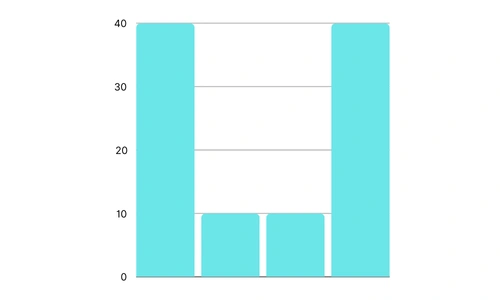
The U-shaped attribution model allocates most credit to the first and last touchpoints in a customer journey, typically assigning 40% to the initial interaction, 40% to the final conversion, and distributing the remaining 20% across middle touchpoints.
It works well for businesses emphasizing both brand awareness and conversion efforts, such as advertising, social media campaigns, and direct sales initiatives.
The model highlights the significance of both initial lead generation and final conversion activities, providing insight into top and bottom-funnel performance.
On the other hand, it is more complex to implement due to the need for comprehensive data tracking (but thankfully there are tools doing this for you).
W-shaped marketing attribution tools
The W-shaped attribution model allocates the majority of credit, usually 90%, to three key touchpoints: the first interaction, lead creation, and final conversion, while distributing the remaining 10% across any intermediate touchpoints.
It is ideal for B2B businesses with long, complex sales cycles where lead nurturing and multiple interactions are crucial for closing deals.
The model emphasizes discovery, nurturing, and closing touchpoints, offering a clear view of the most critical interactions in the customer journey.
On the other hand, it is more complex to implement than simpler models, requiring careful tracking of multiple touchpoints and weighted credit allocation.
Best multi-touch attribution tools
1. LeadSources
LeadSources is a multi-touch attribution software that tracks the source of your leads throughout the whole customer journey.
It is probably the most advanced multi-touch attribution tool when it comes to lead source tracking, as each lead comes with a comprehensive dataset of lead source data: channel, source, UTM parameters (campaign, term, content), device, OS, and browser. LeadSources also records all the pages visited during each session.
By unifying data from multiple sources, LeadSources eliminates fragmented reporting and provides a single source of truth for marketing performance.

Features:
- Multi-touch attribution across all channels
- Captures detailed lead data: source, UTM parameters (campaign, term, and content), page paths, device, OS, and browser
- Integrates with all popular form builders and custom-built forms
- Sends multi-touch attribution data to CRM
Best for: LeadSources is ideal for B2B service businesses using multiple lead generation channels or managing long sales cycles.
Pricing: Starting at $48/month
2. Ruler Analytics
Ruler Analytics is a multi-touch attribution tool that assigns each lead with their marketing data across multiple touchpoints, and links those leads to opportunities, and revenue.

Features:
- Multi-touch attribution modeling
- Revenue and opportunity attribution
- Track lead data for leads coming from web forms, call, and live chat
Best for: Businesses generate leads via forms, live chat, or phone calls that need to connect marketing efforts directly to revenue outcomes.
Pricing:
| Plan | Pricing *Ruler Analytics offers a 12-month agreements as standard. | Website visits included |
| Small business | from £199 (pay monthly)* from £179 (pay annually)* | 5,000 monthly visits |
| Medium business | from £649 (pay monthly)* from £584 (pay annually)* | 50,000 monthly visits |
| Large business | from £1149 (pay monthly)* from £999 (pay annually)* | 100,000 monthly visits |
| Advanced | Contact sales | 200,000+ monthly visits |
3. Usermaven
Usermaven is a multi-touch marketing attribution and analytics platform that tracks every touchpoint across the customer journey, providing businesses with clear insights into how each channel drives conversions.

Features:
- Full customer-journey analytics
- Multi-touch attribution across channels
- Automatic tracking of clicks, page views, form submissions, and custom events
- Built-in attribution models (first-touch, last-touch, linear, time-decay, U-shaped)
- Revenue attribution
Best for: Mid-sized businesses seeking an intuitive, privacy-focused analytics platform with robust multi-touch attribution capabilities.
Pricing:
| Plan | Growth | Scale | Enterprise |
| Price | $84/month (monthly payment) $71/month (annual payment) | $199/month (monthly payment) $169/month (annual payment) | Contact sales |
| Usage | 3 users 3 workspaces 5 years of data history | Unlimited users 5 workspaces 7 years of data history | Unlimited users Custom workspaces Unlimited data history |
4. LeadRx
LeadsRx is a multi-touch, cross-channel marketing attribution platform that tracks and analyzes how every touchpoint across digital and offline channels contributes to conversions and revenue.
Features: It provides multi-touch marketing attribution, web, TV, radio, podcast, and OTT tracking, as well as integration of inbound calls and offline events, giving a holistic view of the customer journey.
Best for: LeadsRx is best suited for enterprise marketers and agencies running complex, multi-channel campaigns.
Pricing: Pricing is available upon request from LeadsRx sales.
5. Dreamdata
Dreamdata is a multi-touch attribution tool that links ad campaign data, customer journeys, and revenue to provide a complete view of marketing performance.

Features:
- Customer journey
- Performance attribution
- Build audience
- AI signals
- Revenue analytics
Best for: Dreamdata is best suited for B2B businesses that need precise analytics to connect marketing activities directly to actual revenue.
Pricing: Dreamdata offers a free tier, with paid plans starting at $750 per month.
6. Triple Whale
Triple Whale is an e‑commerce-focused multi-touch attribution and analytics platform that tracks customer behavior across multiple channels, providing insights into how each touchpoint drives conversions.
Features:
- Multi-touch attribution
- Behavioral analytics
- Proprietary pixel technology
- Signals
- AI agent
- Custom events
- Audience builder
Best for: Direct-to-consumer e‑commerce brands using multiple ad channels and seeking deep behavioral and attribution insights.
Pricing: Triple Whale provides a free tier, with paid plans starting at $149 per month.
7. Hyros
Hyros is a multi-touch campaign attribution and ad tracking tool that links ad interactions to revenue, providing a detailed view of marketing ROI.
Features:
- Multi-touch revenue attribution
- Full ad-platform tracking, and lifetime value (LTV) analytics to measure the impact of each marketing touchpoint.
Best for: Hyros is ideal for businesses with significant ad spend that require granular tracking of ad performance and multi-touch attribution across campaigns.
Pricing: Plans start at $230 per month with annual billing.
8. ThoughtMetric
ThoughtMetric is a dedicated e‑commerce multi‑touch attribution and analytics platform that tracks the full customer journey—from first click to final purchase—and attributes credit for conversions across all relevant marketing touchpoints.
Features:
- Multi‑touch attribution
- Customer journey visualization, campaign and creative performance analysis, product-level analytics, lifetime value (LTV) tracking, and post‑purchase surveys to enrich attribution data
- Integrates with major e‑commerce platforms
Best for: ThoughtMetric is ideal for e‑commerce brands, especially DTC brands, that run multiple marketing channels and ad platforms. It is particularly suited for teams that want a full, accurate view of marketing ROI, understand the contribution of every channel, and make data-driven decisions without needing deep technical resources.
Pricing: Plans begin at US $99/month for stores with up to 50,000 pageviews per month
9. Rockerbox
Rockerbox combines multi-touch attribution, marketing-mix modeling, and testing to give businesses a complete and accurate view of how all their marketing efforts contribute to conversions and revenue.
It captures every touchpoint across digital and offline channels, links them to actual conversions, and allows marketers to understand the true impact of each channel in driving business results.
Features:
- Multi-touch attribution across all channels
- Customizable attribution models
- Cross-device tracking
- Path-to-conversion analysis
- Integration with data warehouses and BI tools
Best for: Medium to large brands running complex marketing campaigns across multiple channels, including digital and offline.
Pricing: Pricing is available upon request.
10. Cometly
Cometly is a multi-touch attribution platform designed to track every interaction in the customer journey and assign accurate conversion credit across all touchpoints, providing a comprehensive view of marketing performance.
Features:
- User actions monitoring across multiple devices, domains, and ad platforms
- Server-side tracking
- AI-powered ad manager
Pricing: Pricing is customized and requires contacting Cometly’s sales team for a tailored quote.
How to choose the multi-touch attribution tool that fits your needs
Are you a B2B service or e-commerce?
B2B companies with long sales cycles may require account-level, multi-touch revenue attribution, while e-commerce brands might focus on tracking multi-channel conversions and optimizing ad spend.
What data do you want to track?
Identify the touchpoints and metrics most important to your business. Do you need to track clicks, form submissions, calls, live chats, ad impressions, or offline events? The more comprehensive your tracking needs, the more robust the attribution tool should be.
What attribution model is best for you?
Different businesses benefit from different models. Linear or time-decay models work well for journeys with multiple touchpoints, while U-shaped or W-shaped models are ideal if you want to emphasize both early and late interactions in the funnel. Choose a tool that supports the model that matches your strategy.
Integration capabilities with your tech stack:
Ensure the platform integrates with your tech stack (form builder, CRM, CMS, ad networks, etc.). This ensures all relevant touchpoints are captured accurately without manual workarounds.
Factor in pricing and scalability
Evaluate the cost relative to the features you need and consider how the tool will scale with your business. Some multi-touch attribution tools offer usage-based pricing, while others provide fixed tiers; pick one that grows with your traffic and marketing complexity.
Test before committing:
Always test the tool with your own data via demos or free trials. This helps confirm it captures all touchpoints, supports your preferred attribution model, and provides actionable insights that match your business needs.
FAQ
Multi-touch attribution assigns credit for a lead or sale to all marketing touchpoints that influenced a customer’s journey, rather than giving all credit to a single channel.
It allows marketers to calculate ROI for each channel, recognize the contribution of early-stage and mid-funnel touchpoints, and make data-driven decisions to optimize marketing spend.
They are especially valuable for businesses with complex customer journeys, multiple marketing channels, or long sales cycles. E-commerce brands and B2B companies benefit the most.
Yes. By understanding the contribution of each channel, marketers can identify underperforming campaigns, optimize budgets, and increase ROI across all channels.
