

TL;DR
- Custom Audience is a paid-media targeting asset built from first-party or platform-owned behavioral data, usually for re-engagement, suppression, or high-intent segmentation.
- For attribution, it turns anonymous traffic and CRM records into measurable audience cohorts that can be tied to MQL quality, SQL velocity, CAC, and ROAS.
- It is highly practical and operationally advanced once identity matching, consent controls, offline conversions, and audience refresh logic are in play.
What Is Custom Audience?
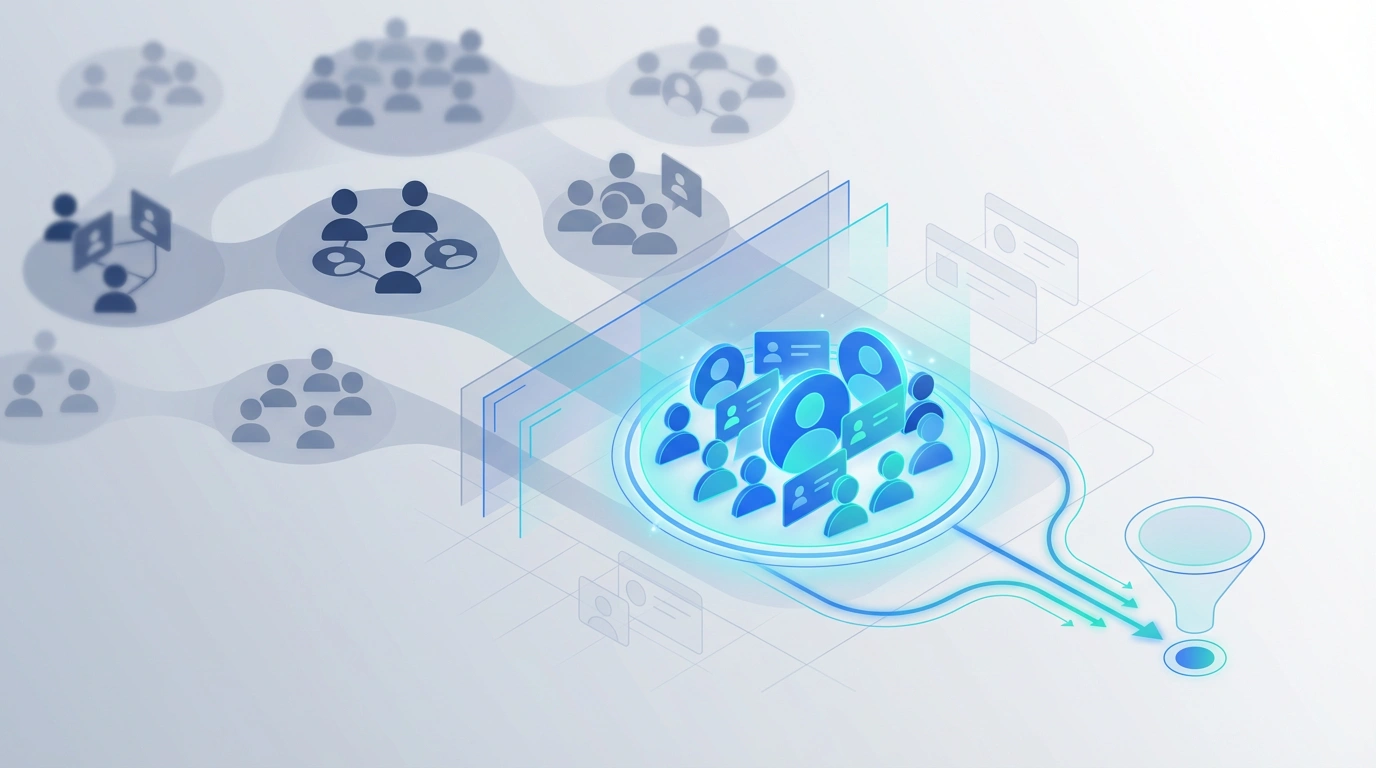
A Custom Audience is a reusable targeting group created from known user signals such as customer lists, website visits, app activity, or on-platform engagement.
It is a tactical audience layer, not a standalone strategy and not a KPI.
In advanced targeting, it lets marketers activate first-party data with more precision than broad interest targeting.
In attribution, it matters because the audience is built from people who already have a measurable relationship to the brand, which changes expected conversion rate, path length, and assisted revenue performance.
Technical complexity is intermediate at setup and advanced at scale.
The concept is practical, revenue-facing, and tightly linked to match quality, data governance, and CRM integration.
Test LeadSources today. Enter your email below and receive a lead source report showing all the lead source data we track—exactly what you’d see for every lead tracked in your LeadSources account.
Understanding the Audience Asset
Lead attribution improves when audience logic reflects real buying signals rather than soft demographic assumptions.
That is where this audience type earns its value.
| Dimension | Assessment |
|---|---|
| Term type | Tactical targeting asset used inside ad platforms |
| Relationship to attribution | Creates measurable cohorts for retargeting, suppression, and revenue-stage segmentation |
| Complexity level | Intermediate to advanced because of identity resolution, consent, exclusions, and offline feedback loops |
| Nature | Highly practical with direct impact on campaign efficiency and reporting quality |
Meta describes customer-list and website audiences as ways to reach people who already showed interest or already exist in your business data.
That makes them closer to demand capture and demand shaping than cold prospecting.
The strategic value is simple.
You stop paying to talk to everyone and start paying to sequence messages around known signals.
Why It Matters for Lead Attribution
Audience design changes reporting outcomes before the model ever assigns credit.
If the audience is high intent, conversion paths shorten and downstream metrics usually strengthen.
If the audience is broad, last-touch wins can look cheap while pipeline quality quietly deteriorates.
This is why executive teams should evaluate these cohorts beyond CTR and CPL.
- They isolate known or modeled intent segments for cleaner channel comparisons.
- They improve suppression logic so existing customers are not miscounted as net-new acquisition.
- They help separate reactivation, nurture, and acquisition economics.
- They give RevOps a more reliable bridge between ad exposure and CRM outcomes.
GA4 attribution paths show touchpoints, days to key event, and revenue contribution across the journey.
That framework is useful because these audiences often influence early, mid, and late-stage touches differently.
HubSpot reinforces the same point by separating contact, deal, and revenue attribution.
Audience performance that looks strong at contact creation can still weaken badly at deal creation or closed-won revenue.
How It Works
The operating model is signal collection, identity matching, activation, and feedback.
- Collect first-party signals from forms, CRM records, website behavior, app events, or platform engagement.
- Normalize identifiers such as email, phone, event parameters, and consent status.
- Upload or sync the audience into the ad platform, where identifiers are matched to eligible users.
- Apply exclusions, recency windows, and funnel-specific creative sequences.
- Send conversion and offline outcome data back into ad and analytics systems for optimization.
Match rate matters, but business quality matters more.
A large audience with weak downstream conversion can still destroy CAC efficiency.
A useful executive formula is Qualified Audience Yield = SQLs or Opportunities from Audience ÷ Total Leads from Audience.
For spend governance, track Cost per Qualified Audience Conversion = Audience Spend ÷ MQLs, SQLs, or Purchases attributed to that cohort.
Data Sources and Models
Not all audiences are built from the same quality of intent.
- Customer list cohorts built from CRM exports, subscribers, or prior buyers.
- Website-based cohorts built from page depth, recency, or high-intent event patterns.
- App-based cohorts built from usage milestones, activation behavior, or subscription status.
- Engagement cohorts built from video views, lead form opens, ad engagement, or social interactions.
- Suppression cohorts built to exclude customers, open opportunities, or unqualified records.
The strongest approach usually combines intent depth with stage logic.
For example, a pricing-page visitor, demo starter, and recycled opportunity should not receive the same creative or bid treatment.
Meta notes that outdated customer lists can affect delivery.
That is a reminder that refresh cadence is part of performance, not just list hygiene.
Custom Audience Best Practices
- Use consented, recent, normalized data and remove stale or legally restricted records.
- Segment by commercial stage, not just by traffic source.
- Exclude current customers, active opportunities, and internal traffic from acquisition reporting.
- Pass offline conversions and CRM stage progression back into media platforms on a fixed cadence.
- Measure incrementality where possible instead of assuming every retargeted or matched conversion was caused by media.
- Review audience overlap to prevent internal bidding competition and distorted frequency.
Gartner found only 52% of senior marketing leaders can prove marketing value.
Salesforce found only 26% of marketers are fully satisfied with data unification.
Those two numbers explain why this audience tactic should be treated as a measurement asset as much as a media asset.
Frequently Asked Questions
How is this different from a lookalike audience?
This audience targets people already known to the business or already connected through measured behavior.
A lookalike audience expands from that seed to find similar new users.
Is a customer list always the best source?
No.
A customer list is strong for upsell, suppression, and retention, but high-intent site behavior or opportunity-stage cohorts may be better for pipeline acceleration.
Does this improve attribution accuracy?
Indirectly, yes.
It creates cleaner cohorts, stronger exclusions, and clearer comparisons between acquisition, re-engagement, and nurture performance.
What is the biggest implementation mistake?
Using stale lists and judging success on click metrics alone.
If CRM outcomes are not fed back into the system, the audience may scale low-value conversions.
Should these audiences be refreshed automatically?
Usually yes.
High-change funnels should refresh daily or weekly so recency, suppression, and sales-stage logic remain accurate.
Can this be used for suppression as well as targeting?
Absolutely.
Suppression is one of the most valuable use cases because it prevents budget waste and protects acquisition reporting from customer overlap.
How should executives judge performance?
Start with MQL rate, SQL rate, opportunity yield, CAC, and revenue per matched cohort.
Then compare those outcomes against broader targeting and holdout-based incrementality where possible.